
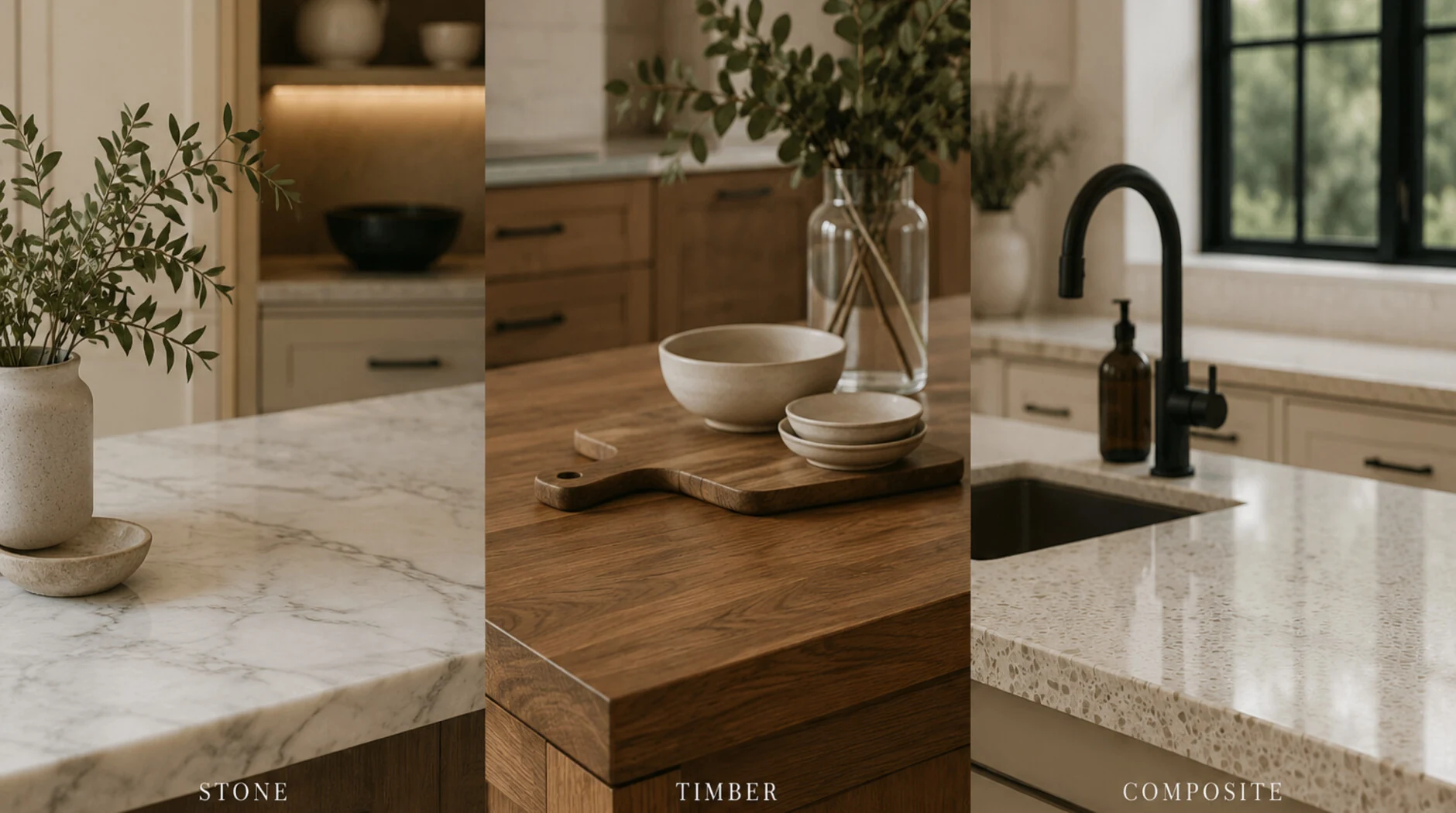
A countertop takes more punishment than any other surface in a kitchen. Hot pans, citrus, red wine, dropped cast iron — over five years, every material shows what it is made of. Here is how the three most common choices actually hold up, based on what we see when clients call us back years after an install.
Stone: hardest wearing, least forgiving
Engineered stone and quartz surfaces shrug off scratches and stains better than anything else on this list. Five years in, a well-installed stone top usually looks close to the day it went in. The catch is what happens when something does go wrong: a chip on an edge or a crack near a cooktop cannot be sanded out. Repairs are possible, but they are a specialist’s job and the color match is rarely perfect.
Stone also asks the most of the cabinetry underneath it. We build cabinet boxes to carry that weight without racking, which is one reason we always want to know the countertop material before the boxes go into production.
Wood: ages the most, and that is the point
A wood top will not look new in five years — it will look lived in. Whether that reads as character or damage depends entirely on maintenance. Oiled hardwood tops want a re-oil once or twice a year; do that, and small scratches blend into the grain and the surface deepens in color beautifully. Skip it, and water marks around the sink turn gray and permanent.
The clients who love their wood tops at year five are the ones who spent twenty minutes with an oil rag at year one, two, three and four.
Workshop rule of thumb
A note on refinishing
The upside no other material offers: a wood top can be fully sanded back and refinished. A ten-year-old top can genuinely be made new again in an afternoon.
Composite and laminate: the quiet achiever
Modern compact laminates and solid-surface composites are a long way from the laminate of twenty years ago. Edges are tight, patterns are convincing, and the price leaves room in the budget for better hardware or an extra bank of drawers — which, honestly, changes daily life more than the countertop does.
At five years the weak points are predictable: heat marks from pans set down without a trivet, and swelling if water finds an unsealed cutout around the sink. Both are avoidable with ordinary care.
Side by side, the trade-offs look like this:
| Material | Wear resistance | Repairability | Look at five years |
|---|---|---|---|
| Stone | Excellent | Specialist only | Near new |
| Wood | Moderate | Sand and re-oil at home | Deepened, lived-in |
| Composite | Good | Panel replacement | Clean with care |
How to choose
- Cook constantly, hate maintenance: stone. Pay once, wipe it down, move on.
- Want warmth and don’t mind a ritual: wood. It rewards the attention.
- Renovating on a budget or outfitting a rental: composite. Spend the difference where it counts.
Still deciding? Bring your shortlist to a consultation and we will show you samples of all three, five years worn. Start a conversation and we will help you match the surface to how you actually cook.